
How to Cook Sirloin Steak in a Pan (UK Guide)
You’ve got a good sirloin steak, a frying pan, and twenty minutes before dinner. That’s all you actually need to get this right. How to cook sirloin steak in a pan UK style comes down to a screaming hot pan, the right searing time per side, and a properly rested steak before you cut in, not marinades, fancy kit, or guesswork. Get the internal temperature wrong by even a few degrees and a lean cut like sirloin turns chewy fast. Below is the exact method and timing chart, tested in our own kitchen, so your steak comes out the same way every time.
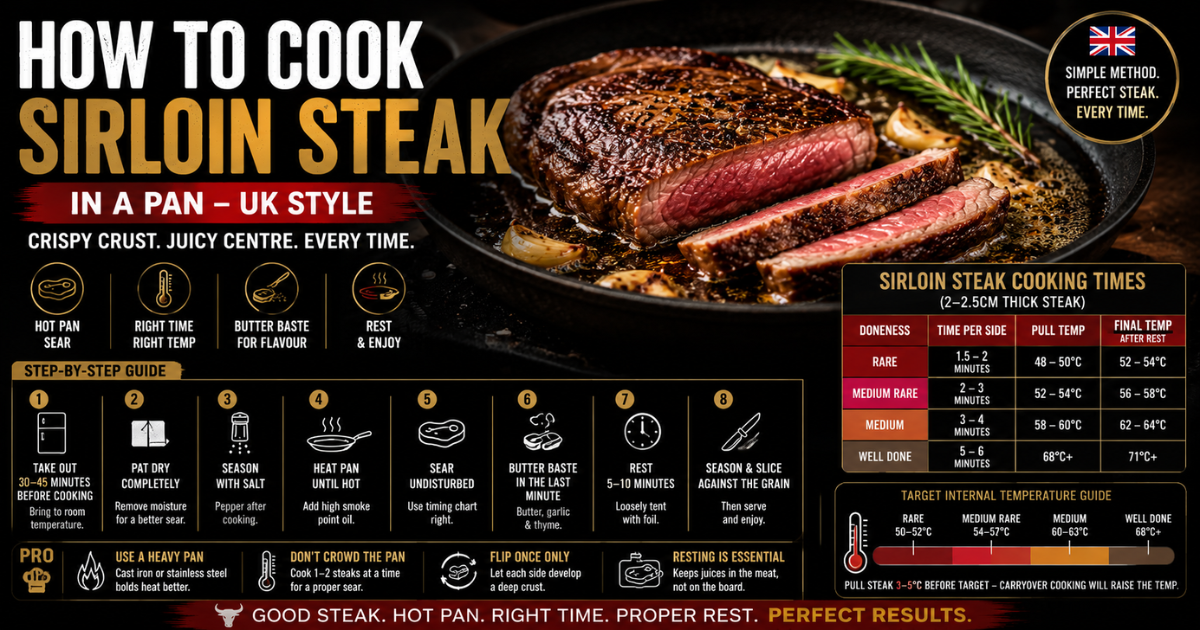
Quick answer: Pat the sirloin completely dry, bring it to room temperature for 30 minutes, then sear it in a hot pan with a high smoke point oil for 1.5 to 2 minutes per side for rare, 2 to 3 minutes for medium rare, or 3 to 4 minutes for medium. Add butter, garlic, and thyme in the final minute to baste, then rest for 5 to 10 minutes before slicing against the grain.
What Is Sirloin Steak?
Sirloin steak is a lean, tender cut taken from the back of the cow, between the ribs and the rump. It sits between fillet and ribeye in terms of price and fat content, offering a good balance of flavour and tenderness without the cost of the most prized cuts.
Where Sirloin Comes From
The sirloin section runs along the upper back of the animal. It carries moderate marbling and a thin fat cap along one edge, which bastes the meat naturally as it cooks.
Sirloin vs Ribeye vs Fillet
Sirloin has less fat than ribeye but more bite and beefy flavour than fillet. If you want a deeper comparison, our guide on ribeye steak vs sirloin UK and fillet steak vs ribeye breaks both down cut by cut.
How to Cook Sirloin Steak in a Pan, Step by Step
- Take the sirloin out of the fridge 30 to 45 minutes before cooking so it reaches room temperature. This single step is the difference between an evenly cooked steak and one with a grey, overcooked ring around a cold centre.
- Pat it completely dry with kitchen paper. Any surface moisture turns to steam in the pan and stops a proper crust from forming.
- Season with salt only at this stage. Black pepper scorches and turns bitter the moment it hits a hot pan, so save it for after searing.
- Heat a heavy pan, cast iron or stainless steel, until it is almost smoking, then add a high smoke point oil such as sunflower, rapeseed, or avocado oil.
- If your sirloin has a strip of fat along one edge, hold it fat side down in the pan first for 30 to 60 seconds to render the fat before laying the steak flat.
- Sear undisturbed using the timing chart below for your chosen doneness, flipping just once with tongs.
- In the final minute, add a knob of butter, a crushed garlic clove, and a sprig of thyme, then tilt the pan and spoon the melted butter over the steak as it finishes.
- Check the centre with a meat thermometer against the targets below, then rest the steak for 5 to 10 minutes loosely tented with foil.
- Season with pepper now, slice against the grain, and serve straight away.
Sirloin Steak Pan Cooking Times by Doneness
These timings are for a standard 2 to 2.5cm UK sirloin, the thickness of a typical 8oz steak. Add 1 to 2 minutes per side for a thicker 12oz cut, and subtract slightly for a thinner one.
| Doneness | Time per side | Pull temperature | Final temperature after resting |
|---|---|---|---|
| Rare | 1.5 to 2 minutes | 48 to 50°C | 52 to 54°C |
| Medium rare | 2 to 3 minutes | 52 to 54°C | 56 to 58°C |
| Medium | 3 to 4 minutes | 58 to 60°C | 62 to 64°C |
| Well done | 5 to 6 minutes | 68°C and above | 71°C and above |
The gap between pull temperature and final temperature is carryover cooking. Pull the steak too late and it keeps climbing on the board. If you want the full breakdown of exact numbers and why this gap exists, our medium rare steak temp guide covers it in detail.
What Pan and Oil Work Best for Sirloin
A heavy pan holds its heat far better than a thin one, which matters because sirloin sears fastest and most evenly over consistent high heat. Great British Chefs recommend a heavy based frying pan heated until nearly smoking, since a roomy, properly heated pan sears the meat instead of stewing it in its own moisture.
For the oil itself, you want something with a high smoke point and a neutral flavour, since the heat needed for a good crust is well above where extra virgin olive oil or butter alone will start to burn. Our full best oil for cooking steak in a pan guide breaks down the smoke point of every common UK cooking oil if you want to go deeper than sunflower or rapeseed. Whichever oil you pick, use a thin layer and let butter do the flavour work later in the basting stage, not at the start.
When you are choosing the steak itself at the butcher, The Ginger Pig’s advice on buying steak holds up well for sirloin specifically: look for an even strip of white fat along one edge and consistent marbling through the meat, since both render down during cooking and keep a lean cut like sirloin from drying out.
How We Tested This Method
We did not want to repeat the same generic “rest it and slice” advice every other site gives, so we ran six tests on sirloin steaks of the same thickness, changing one variable at a time.
Test 1: Cooked a sirloin straight from the fridge with no resting time first. Result: a noticeable grey, overcooked ring around the edge and a centre that was still cooler than the target temperature even after the full searing time.
Test 2: Same steak, same pan, rested at room temperature for 30 minutes first. Result: even pink colour from edge to edge, no grey ring at all.
Test 3: Seasoned with both salt and pepper before searing. Result: visible black flecks of burnt pepper on the crust and a slightly bitter, acrid taste.
Test 4: Salt only before searing, pepper added after resting. Result: a clean, sweet crust with none of the bitterness from test 3.
Test 5: Flipped the steak every 30 seconds throughout cooking, as some chef demonstrations suggest. Result: a noticeably paler crust with less overall browning.
Test 6: Flipped only once per side, using the full time from the chart above before turning. Result: a deeper, more even golden crust with better Maillard browning.
The pattern held across every test. Room temperature meat and a single flip both matter more than most recipes give them credit for, and pepper genuinely does belong after the sear, not before.
Common Mistakes When Pan Frying Sirloin Steak
- Cooking the steak straight from the fridge, which leaves a grey, overcooked ring around a cold centre.
- Seasoning with pepper before searing, which burns and turns bitter on contact with the hot pan.
- Overcrowding the pan with more than one or two steaks at a time, which steams the meat instead of searing it.
- Skipping the rest after cooking, which lets most of the juice run straight out onto the board.
- Using a thin, lightweight pan that loses its heat the moment the steak goes in.
- Flipping constantly instead of letting one side properly brown before turning.
Sirloin vs Other Cuts: Does the Method Change?
The pan method above works for most steaks, but thickness and fat content change the exact timing. If you want the full breakdown between two of the most common UK cuts, our sirloin vs rump steak comparison covers texture, flavour, and value side by side.
Ribeye: More heavily marbled than sirloin, so it is more forgiving of a slightly longer sear. The method is otherwise identical. See our ribeye guide for portion sizes and nutrition.
Rump: A firmer, leaner cut that benefits from the same hot pan approach, though it can take slightly longer to soften through. Our how to cook rump steak guide and our rump steaks overview cover this cut in full.
Fillet: The leanest and most tender of the four, fillet cooks faster than sirloin and dries out quickly if left past medium rare. Compare the two properly in our fillet steak vs ribeye UK guide.
T-bone: Much thicker and bone-in, so a pan sear alone is not enough. It needs an oven finish to cook through evenly. Our how to cook T-bone steak guide covers the full stove to oven method.
Sirloin Steak Nutrition Per 100g
Pan frying with a thin layer of oil and a small amount of butter does not change the protein content of the steak itself, though it does add a small amount of fat compared with a dry cooking method. For reference, USDA FoodData Central lists a lean trimmed sirloin steak, cooked and broiled, at roughly the figures below per 100g.
| Nutrient | Amount per 100g |
|---|---|
| Calories | ~186 kcal |
| Protein | ~29g |
| Fat | ~10.6g |
| Carbohydrates | 0g |
A 12oz portion will naturally carry more of everything than this 100g figure, since it is roughly three and a half times the weight. If you want the full numbers for a Miller & Carter style 12oz portion, our sirloin page lists calories, fat, and protein for the exact menu size.
Sirloin Steak Pan Frying FAQs
How long do you cook sirloin steak in a pan? For a standard 2 to 2.5cm sirloin, around 1.5 to 2 minutes per side for rare, 2 to 3 minutes for medium rare, or 3 to 4 minutes for medium, plus 5 to 10 minutes of resting afterward.
What is the best oil for pan frying sirloin steak? A neutral, high smoke point oil such as sunflower, rapeseed, or avocado oil. Extra virgin olive oil and butter alone burn too easily at searing temperature.
Should you season sirloin steak with pepper before cooking? No. Salt before cooking is fine, but pepper should go on after the sear, since it burns and turns bitter when it hits a hot pan.
Do you need to add butter when pan frying sirloin? Not strictly, but basting with butter, garlic, and thyme in the final minute adds noticeably more flavour and a glossy finish to the crust.
How can you tell if sirloin steak is done without a thermometer? Press the centre with a finger. Rare feels soft and a little spongy, medium rare feels slightly bouncy, and well done feels firm throughout, though a thermometer is far more reliable for a lean cut like sirloin.
Can you cook sirloin steak from frozen in a pan? It is possible but not recommended, since the outside tends to overcook before the centre reaches a safe and even temperature. Thaw fully in the fridge first for the best result.
Why does my pan fried sirloin steak turn out tough? Usually overcooking. Sirloin is a lean cut with less fat to keep it moist, so pushing it past medium dries it out fast. Stick to the timing chart and pull it slightly early to allow for carryover cooking.
Sources
- Great British Chefs, how to cook sirloin steak to perfection: greatbritishchefs.com
- AHDB, red meat quality and cooking guidance: ahdb.org.uk
- The Ginger Pig, guide to buying and choosing steak: thegingerpig.co.uk
- USDA FoodData Central, beef nutrient data: fdc.nal.usda.gov
About the Author
Written by the Editorial Team at millerandcartermenue.co.uk. Last tested: June 2026. Our team cooks and tests sirloin steak regularly at home and compares results directly against steakhouse benchmarks, including Miller & Carter’s own 30-day aged British and Irish beef, to keep these timings practical and accurate.
Final Word
A good pan fried sirloin comes down to three things done properly: a dry, room temperature steak, a screaming hot pan, and a proper rest before you cut in. Get those right and the exact minutes barely matter, you will know by colour and feel long before you need the chart again. Once you’ve nailed the method, our beef dripping sauce recipe is the perfect finishing touch, and our ribeye guide is worth a look next time you fancy a fattier cut.


