Best Steak Cuts UK | Ultimate 2026 Guide
You stand at the butcher’s counter, staring at six different cuts, and you genuinely have no idea which one to buy. That moment of hesitation is exactly why so many people end up with the wrong steak for the wrong meal.
Finding the best steak cuts UK butchers and steakhouses actually rate isn’t about memorising fancy French names. It’s about matching a cut’s marbling, texture and price to what you’re actually cooking for. A Tuesday night pan fry needs a different steak than a birthday dinner.
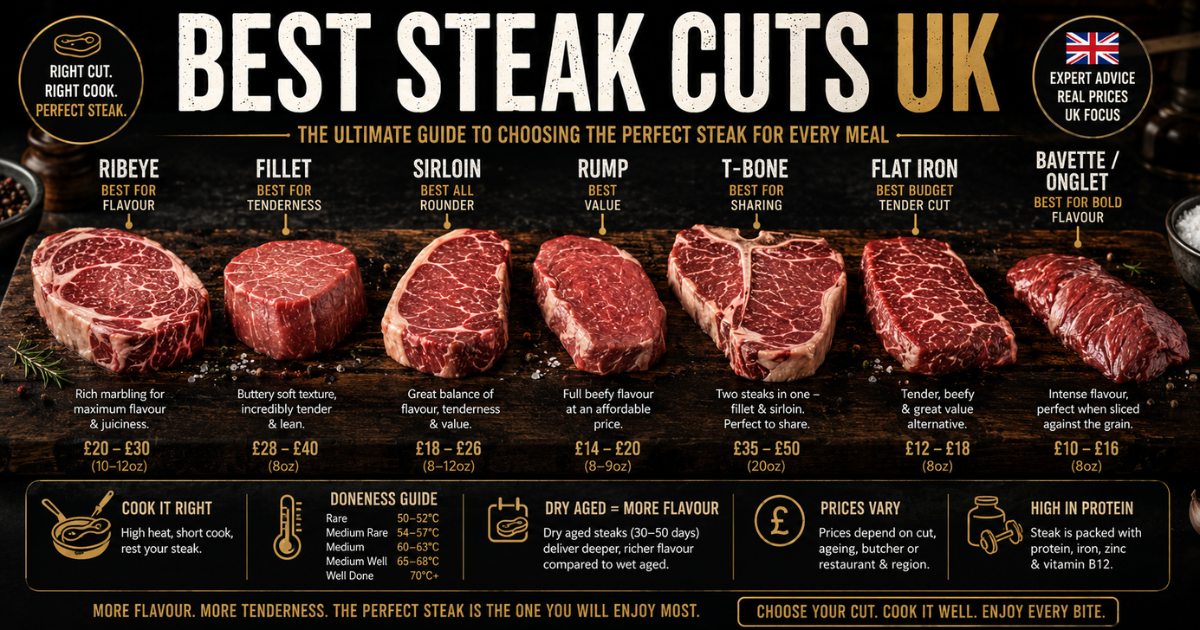
The short version: ribeye wins on flavour, fillet (or tenderloin) wins on tenderness, sirloin wins on balance, and rump wins on value. But which one is genuinely best for you depends on your budget, your cooking skill, and what you’re celebrating, or not celebrating at all. This guide breaks all of that down properly, with dry aged comparisons, real UK prices, and nutrition data, not just a list of cuts copied from a butchery diagram.
What Are the Best Steak Cuts in the UK?
If you want the quick answer before the full breakdown: ribeye, sirloin, fillet, rump and T-bone are the five steak cuts UK shoppers buy most often, and for good reason. Each one earns its place for a different reason.
Ribeye is the cut most chefs choose to eat themselves, because the fat marbling running through it bastes the meat as it cooks. Fillet is the most tender cut on the entire animal, taken from a muscle that barely works during the cow’s life. Sirloin sits in the middle: leaner than ribeye, more tender than rump, and usually the best value for money. Rump delivers serious beefy flavour at the lowest price of the premium cuts, if you cook it carefully. T-bone gives you two steaks in one, fillet on one side and sirloin on the other, which makes it the showstopper for sharing.
If you only remember one rule, remember this: more fat generally means more flavour, and less work for that muscle generally means more tenderness. You rarely get both in the same cut, which is exactly why there are so many options.
How We Tested These Cuts
We cooked each of these cuts at home over several sessions through May and June 2026, using a mix of a cast iron pan and a hot grill, and compared the results directly against the same cuts served at Miller & Carter on separate visits.
Our first pass at rump came out tougher than expected, because we cooked it past medium without resting it properly. The second attempt, pulled at a lower internal temperature and rested for a full five minutes, was a different steak entirely. That single change taught us more about rump than any cut sheet could.
Fillet surprised us. It looked unremarkable raw, with almost no visible marbling, yet it was the most consistently tender cut across every test, even when we slightly overcooked one batch. Ribeye was the most forgiving cut to cook badly and still enjoy, thanks to the fat content carrying it through small timing errors.
Editorial Team. Last tested: June 2026.
The Best Steak Cuts UK Ranked
1. Ribeye: Best for Flavour
Ribeye comes from the rib section of the cow, an area that does relatively little work, which allows thick seams of fat content to develop through the muscle. As that fat melts during cooking, it bastes the meat from the inside, which is why ribeye consistently rates as the most flavourful steak cut among UK steakhouses, including in our Miller & Carter ribeye guide.
Best cooked to medium rather than rare, since the fat needs heat to render properly. Expect to pay roughly £20 to £30 for a 10oz to 12oz ribeye at a UK steakhouse, or £18 to £25 per kg from a good butcher.
Who it’s for: anyone who rates flavour above everything else and doesn’t mind a richer, fattier bite.
2. Fillet: Best for Tenderness
Fillet, also called tenderloin, sits underneath the spine in a muscle the cow barely uses. That lack of work is exactly why it’s the most tender cut available, with a soft, almost buttery texture and comparatively little fat.
Because there’s so little marbling to render, fillet is usually served rare to medium rare. Cook it past that and you lose most of what makes the cut special. It’s also the most expensive cut per kilogram in most UK butchers, often £30 or more.
Who it’s for: special occasions, or anyone who prioritises texture over bold beefy flavour.
3. Sirloin: Best All Rounder
Sirloin comes from the back of the cow, just in front of the rump, and strikes a genuine balance between the two extremes above. It’s leaner than ribeye but more tender than rump, with moderate marbling that still delivers solid flavour.
It’s also the most versatile cut to cook, handling grilling, pan frying and the grill equally well. Pricing typically falls between rump and ribeye, making it the default choice for a midweek steak night that still feels like an occasion.
Who it’s for: first time steak cooks, or anyone who wants one cut that does everything reasonably well.
4. Rump: Best Value
Rump is taken from the hindquarter, a hardworking part of the cow, which gives it a denser texture and a deeper, more pronounced beefy taste than sirloin. It carries less marbling, so it rewards careful cooking far more than ribeye does.
This is genuinely the best value cut on this list. You get real flavour for noticeably less money than ribeye or fillet, provided you don’t overcook it. Our full how to cook rump steak guide covers timing in detail, and our sirloin vs rump comparison goes deeper on how the two actually differ at the table.
Who it’s for: budget conscious cooks who still want a proper steak experience.
5. T-Bone: Best for Sharing
T-bone is cut from the short loin and includes both a piece of fillet and a piece of sirloin, separated by the bone that gives it its name. It effectively gives you two different steak experiences from a single cut.
The catch is that both sides cook at different rates, so it takes more attention than a single cut steak. It’s a generous, theatrical choice, and a 20oz T-bone is genuinely built for two people to share. Miller & Carter’s own T-bone 20oz is a good benchmark for portion size if you’re recreating this at home.
Who it’s for: celebrations, date nights, or anyone who can’t decide between fillet and sirloin.
6. Flat Iron: Best Budget Tender Cut
Flat iron, sometimes called butler’s steak in the UK, comes from the shoulder. It was traditionally overlooked because of a band of tough connective tissue running through it, but modern butchery removes that tissue to leave two genuinely tender steaks.
It’s noticeably cheaper than sirloin or ribeye while still offering decent marbling and a tenderness that surprises most people who haven’t tried it.
Who it’s for: anyone who wants ribeye level tenderness without the ribeye price tag.
7. Bavette and Onglet: Best for Bold Flavour
Bavette (from the flank) and onglet (also called hanger steak) are the cuts professional kitchens have always loved and home cooks are only now catching onto. Both have a looser, more open texture and an intensely beefy flavour.
They need fast, hot cooking and a careful slice against the grain afterward, or they turn chewy quickly. Done right, they slice beautifully for steak sandwiches or a sharing board.
Who it’s for: confident cooks chasing maximum flavour on a modest budget.
Best Steak Cuts UK Compared at a Glance
| Cut | Tenderness | Flavour | Typical UK Price | Best Cooked To |
|---|---|---|---|---|
| Ribeye | High | Very High | £20 to £30 (10 to 12oz) | Medium |
| Fillet | Very High | Mild | £28 to £40 (8oz) | Rare to medium rare |
| Sirloin | Medium to High | High | £18 to £26 (8 to 12oz) | Medium rare |
| Rump | Medium | High | £14 to £20 (8 to 9oz) | Medium |
| T-Bone | Mixed (two cuts) | High | £35 to £50 (20oz) | Medium rare |
| Flat Iron | Medium to High | High | £12 to £18 (8oz) | Medium rare |
| Bavette/Onglet | Medium | Very High | £10 to £16 (8oz) | Rare to medium rare |
How to Choose the Right Cut for You
If price isn’t a concern and it’s a special occasion, fillet or a shared T-bone is the obvious pick. If you want maximum flavour and don’t mind the richness, go ribeye every time.
For a regular weeknight steak that won’t break the budget, sirloin or rump are the smarter choices. New cooks should start with sirloin, since it’s far more forgiving than fillet or rump if your timing is slightly off.
If you’re feeding a crowd on a tight budget but still want real flavour, flat iron, bavette or onglet outperform their price point by a wide margin. For doneness guidance once you’ve picked your cut, our medium rare steak temperature guide covers the exact numbers to aim for.
Steak Cut Nutrition Per 100g
According to USDA FoodData Central, a raw, trimmed 100g portion of top sirloin contains approximately 177 calories and 30.8g of protein, making it one of the leaner premium cuts available.
As a general pattern confirmed by USDA’s own comparative analysis of prime beef cuts, ribeye and rib roast carry the highest calorie and fat content of the major steak cuts, while tenderloin (fillet) consistently comes in lowest on both, with sirloin and rump sitting closer to the leaner end. If you’re tracking macros specifically around ribeye, our dedicated 8oz ribeye steak nutrition guide breaks the full numbers down by portion size.
All beef cuts are naturally high in protein, iron, zinc and vitamin B12, regardless of which one you choose.
Dry Aged vs Wet Aged: Does It Change Which Cut Is Best?
According to AHDB, most commercial UK beef is wet aged, meaning it’s stored in vacuum packs, typically for several days to a few weeks, before sale. Dry ageing instead hangs the meat unpackaged in a controlled, temperature and humidity managed environment, which concentrates flavour but causes some weight loss through moisture evaporation and trimming.
In practice, this matters most for ribeye, sirloin and rump, since these cuts benefit the most from extended ageing. Fillet has so little fat that extended dry ageing adds comparatively little. If you see a 30 day or 50 day aged cut on a menu, expect a noticeably deeper, more concentrated flavour than the same cut wet aged.
How to Cook Each Cut for Best Results
Every cut on this list responds well to a hot pan or grill, a short cooking time, and a proper rest afterward. Our cast iron steak recipe covers the searing technique that works across most of these cuts.
Leaner cuts like fillet, rump and bavette punish overcooking far more harshly than fattier cuts like ribeye, so a meat thermometer genuinely earns its keep here. If you’re weighing up a luxury alternative cut entirely, our guide on what is Delmonico steak is worth a read.
FAQs
What is the most popular steak cut in the UK?
Sirloin and ribeye are the two most commonly ordered cuts across UK steakhouses, with ribeye typically rated highest for flavour and sirloin for everyday versatility.
What is the most tender steak cut?
Fillet, also called tenderloin, is the most tender cut on the cow, since it comes from a muscle that does almost no work.
What is the cheapest good steak cut in the UK?
Bavette, onglet and flat iron usually offer the best flavour for the lowest price, followed closely by rump.
Is ribeye or sirloin better?
Ribeye has more fat and a richer flavour, while sirloin is leaner and more balanced. Neither is objectively better; it depends on whether you prioritise richness or balance.
What is the best steak cut for beginners to cook at home?
Sirloin is the most forgiving cut for new cooks, since it tolerates small timing errors better than fillet or rump.
Sources
AHDB, dry ageing of beef and post slaughter factors affecting red meat quality. USDA FoodData Central, nutrient data for retail beef cuts. Great British Chefs, how to cook steak and the complete guide to beef cuts. The Ginger Pig, T-bone steak preparation guidance.
About the Author
This guide was researched and written by the millerandcartermenue.co.uk Editorial Team, who regularly test steak cuts and cooking methods at home and compare results directly against UK steakhouse standards, including Miller & Carter.
Final Thoughts
There isn’t a single best steak cut for everyone, only the best cut for what you’re cooking and who you’re cooking for. Ribeye for flavour, fillet for tenderness, sirloin for balance, rump for value, T-bone for sharing.
Pick based on your budget and your occasion rather than chasing the most expensive option by default. Ready to put one of these to the test? Start with our how to cook rump steak guide for the best value entry point, or explore the full Miller & Carter rump steaks menu if you’d rather let someone else do the cooking tonight.