What Is Delmonico Steak | Cut, History, Price & How to Cook
Finding clear and reliable information about Delmonico steak can be surprisingly difficult. Although it is often described as a premium cut of beef, the term “Delmonico steak” does not refer to one single, officially defined cut. Instead, it is a historic name used for different cuts depending on the butcher, restaurant, or region. This inconsistency has created confusion about what the steak actually is, where it comes from, how tender it is, and how it should be cooked.
In this complete guide, you’ll learn exactly what a Delmonico steak is, which cut it usually refers to today, how it compares to ribeye steak, where it comes from on the cow, how much it costs, and the best way to cook it.
What Is a Delmonico Steak?
Delmonico steak is a thick-cut, high-quality beef steak traditionally associated with Delmonico’s Restaurant in New York City. Historically, the name referred to a signature house steak served at the restaurant rather than a specific anatomical cut.
Today, most butchers and steakhouses use the name “Delmonico steak” to describe a thick-cut ribeye steak, although in some regions it may refer to a top loin, strip steak, or even chuck eye steak.
In simple terms: Delmonico steak is usually a well-marbled, thick-cut steak — most commonly a ribeye — known for its rich flavor and tenderness.
What Cut of Beef Is a Delmonico Steak?
If you’ve ever wondered what cut Delmonico steak really is, the answer depends on who is labeling it.
In modern American butchery, Delmonico steak most commonly refers to:
- Boneless ribeye steak (most common)
• Chuck eye steak (sometimes called the “poor man’s ribeye”)
• Top loin steak
• New York strip steak
There is no USDA definition of Delmonico steak, so the name is more traditional than technical.
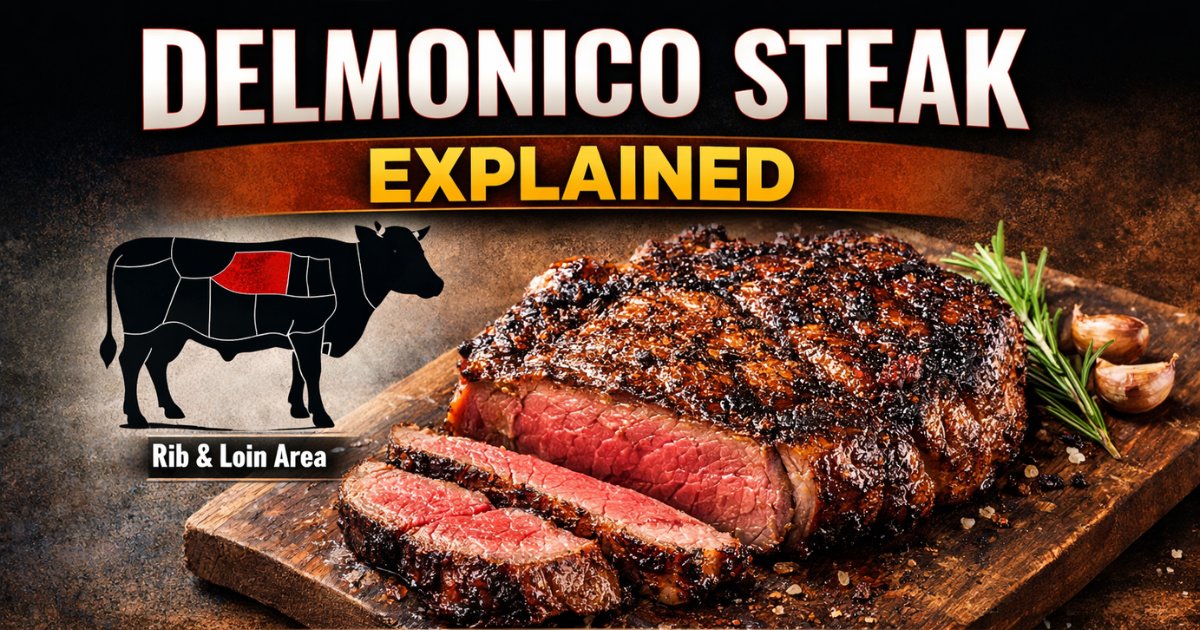
The ribeye version comes from the rib primal, specifically from the longissimus dorsi muscle. This muscle produces a well-marbled steak with rich flavor and excellent tenderness.
Because of this marbling and thickness, ribeye-style Delmonico steaks are considered the most authentic modern interpretation.
Where Does Delmonico Steak Come From on a Cow?
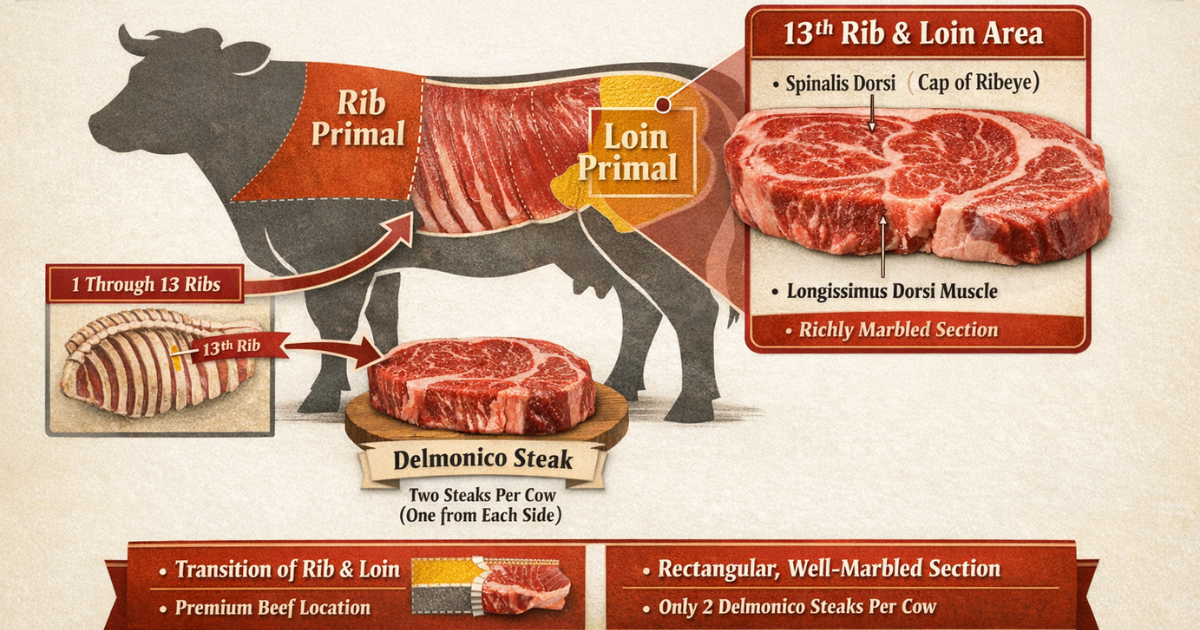
Understanding the steak’s location helps explain its texture and flavor.
When it refers to ribeye, Delmonico steak comes from the rib primal section of the cow, located between ribs 6 and 12. This area is known for producing tender, flavorful cuts due to limited muscle movement.
The longissimus dorsi muscle runs along the spine and is responsible for:
- Tender texture
• Consistent marbling
• Juicy flavor
Some variations labeled as Delmonico may come from the short loin (strip steak) or chuck section (chuck eye). However, ribeye remains the most widely accepted and premium version.
Origin and History of Delmonico Steak
Delmonico Steak Origin Explained
The name “Delmonico” comes from Delmonico’s Restaurant, established in 1837 in New York City. It is widely considered America’s first fine-dining restaurant.
The Delmonico brothers built a reputation for serving luxurious meals, premium wines, and high-end beef dishes. One of their signature offerings was a thick, high-quality steak that eventually became known as the Delmonico steak.
Unlike modern steak labeling, 19th-century menus often used house names rather than anatomical cut names. As a result, the term “Delmonico steak” became a brand-style label associated with quality rather than a precise cut.
Delmonico Steak vs Ribeye
This is one of the most searched comparisons. In most cases, Delmonico steak is simply a thick-cut ribeye steak — but not always.
🥩 Delmonico Steak vs Ribeye Steak
| Feature | Delmonico Steak | Ribeye Steak |
|---|---|---|
| Definition | Historic steakhouse name | Official USDA cut |
| Most Common Cut | Ribeye | Ribeye |
| Marbling | High (usually) | High |
| Tenderness | Very tender | Very tender |
| Consistency | Can vary | Consistent |
If your butcher labels a ribeye steak as Delmonico, they are essentially the same cut. The key difference is that ribeye has a clear anatomical definition, while Delmonico steak is a traditional marketing name.
Is Delmonico Steak Tender?
Yes, when it refers to ribeye, Delmonico steak is considered very tender.
The rib section produces beef with:
- High marbling
• Rich fat distribution
• Soft muscle fibers
However, if labeled from the chuck section, it may be slightly less tender but still flavorful.
How to Cook Delmonico Steak
Because it is typically thick and well-marbled, Delmonico steak performs best with high-heat cooking methods.
-
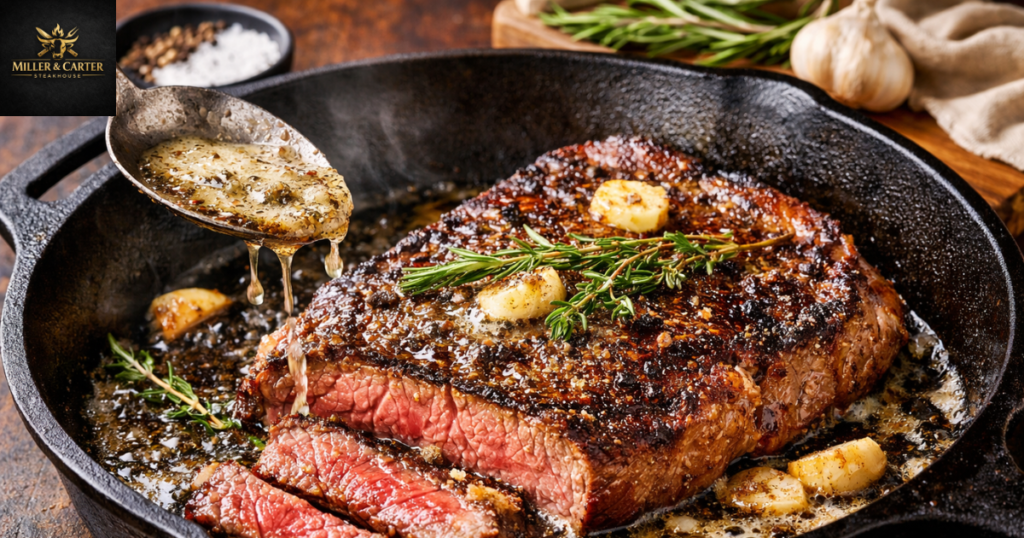
Pan-Seared (Cast-Iron Skillet Method)
Heat a cast-iron skillet until very hot.
Season generously with salt and pepper.
Sear 3–4 minutes per side.
Add butter and baste.
Finish in the oven if thicker than 1.5 inches.
-
Grilling
Preheat the grill to high heat.
Cook 4–5 minutes per side for medium-rare.
Internal Temperature Guide
- Rare: 120–125°F
• Medium Rare: 130–135°F
• Medium: 140–145°F
Let the steak rest for at least 5–10 minutes before slicing to retain juices.
How Much Does a Delmonico Steak Cost?
The price of Delmonico steak depends largely on the cut and USDA grade.
In the United States:
💲 Delmonico Steak Price Guide (US)
| Grade / Location | Average Price |
|---|---|
| USDA Choice | $15–$22 per pound |
| USDA Prime | $25–$40 per pound |
| Restaurant Price | $35–$70 per serving |
Factors that influence price:
- Grade (Prime vs Choice)
• Grass-fed vs grain-fed
• Thickness
• Restaurant markup
Why Is It Called a Delmonico Steak?
The steak is named after Delmonico’s Restaurant in New York City, where it was first popularized in the 19th century.
At the time, dining at Delmonico’s represented luxury and prestige. The steak became associated with quality, richness, and fine dining — a reputation it still carries today.
Frequently Asked Questions
What is the difference between a ribeye and a Delmonico steak?
A ribeye is a clearly defined USDA cut from the rib section, while Delmonico is more of a traditional name that’s often used for a thick-cut ribeye—but can vary depending on the butcher.
What is so special about a Delmonico steak?
It’s known for being thick, well-marbled, and rich in flavor, plus it carries that old-school New York steakhouse history behind the name.
Is a Delmonico steak a good cut?
Yes, especially when it’s cut from the rib section—it’s tender, juicy, and packed with beefy flavor.
What is another name for a Delmonico steak?
Most of the time, it’s simply another name for a ribeye steak, though some places may label strip steak or chuck eye as Delmonico.
Is Delmonico steak the same as ribeye?
In most modern cases, yes—it refers to a thick-cut ribeye steak.
Why is Delmonico steak so expensive?
Because it is usually cut thick and comes from well-marbled rib primal sections, especially when graded USDA Prime.
Is Delmonico steak better than sirloin?
Yes, rib-based Delmonico steaks are typically more tender and flavorful than sirloin steak.
Conclusion: Is Delmonico Steak Worth It?
If you’ve ever been confused about what cut of steak Delmonico is, you’re not alone. The name originated from a historic New York restaurant, but today it most commonly refers to a thick-cut ribeye steak known for rich marbling and bold beef flavor.
When sourced from the rib primal, Delmonico steak offers excellent tenderness, juicy texture, and a premium steakhouse experience. However, because the term is not USDA-regulated, it’s important to ask your butcher exactly which cut you’re buying.
As someone who has studied beef cuts, steak grading, and cooking techniques for years, one thing is clear: when labeled properly and cooked to medium rare (130–135°F), a well-marbled Delmonico steak delivers the same luxurious experience as a high-quality ribeye steak.
If you want the best results:
- Choose USDA Prime or USDA Choice grade
• Look for even beef marbling
• Use high-heat cooking methods
• Let the steak rest before slicing
Whether grilled or pan-seared, this classic American steakhouse steak remains a symbol of traditional steakhouse quality in the United States.