Cast Iron Steak Recipe (Perfect Sear Every Time)
A perfectly cooked cast iron steak recipe is one of the easiest ways to get steakhouse-quality results at home.
When done right, cast iron steak develops a deep brown crust from the Maillard reaction, locks in juices, and delivers that rich, beefy flavor people crave. But many home cooks struggle with cast iron steak cook time, uneven doneness, or burning butter too early.
The good news? You don’t need a grill. You don’t need fancy tools. You just need the right cast iron skillet, proper heat control, and a simple method.
In this complete cast iron steak recipe, you’ll learn:
- How to cook steak in a cast iron skillet
- The exact steak temperature guide for medium rare and beyond
- When to use the cast iron steak oven finish method
- The best oil for searing (see our best oil for cooking steak in a pan guide)
- How to butter baste like a chef
If you’re new to steak cooking, you may also want to explore our complete collection of steak guides in our homepage resource hub. Let’s break it down step by step.
Table of Contents
ToggleWhy Cast Iron Is Best for Steak
Cast iron wins because of heat retention and even cooking. Unlike thinner pans, cast iron holds high heat longer. That steady heat creates a better crust and prevents gray, steamed meat.
If you’ve ever compared stainless steel vs cast iron steak, you’ll notice cast iron produces a darker sear and more consistent browning.
It also transitions directly from stovetop to oven, which makes it ideal for thicker cuts.
How to Cook Steak in a Cast Iron Skillet
Here’s the core method used in nearly every professional cast iron steak recipe.
Step 1: Bring Steak to Room Temperature
Let it sit out 30–45 minutes.
Pat completely dry. Moisture prevents proper searing.
Season generously with salt and pepper.
Step 2: Preheat the Cast Iron Skillet
Heat over high for 5–7 minutes.
The pan should be very hot before adding steak.
This step is critical for proper crust formation.
Step 3: Add Oil, Then Steak
Add 1 tablespoon oil.
Place steak down and do not move it.
For a 1-inch steak:
- 3–4 minutes first side
- Flip
- 3–4 minutes second side
This timing is often called the 3-3-3 steak rule, though thickness matters more than timing.
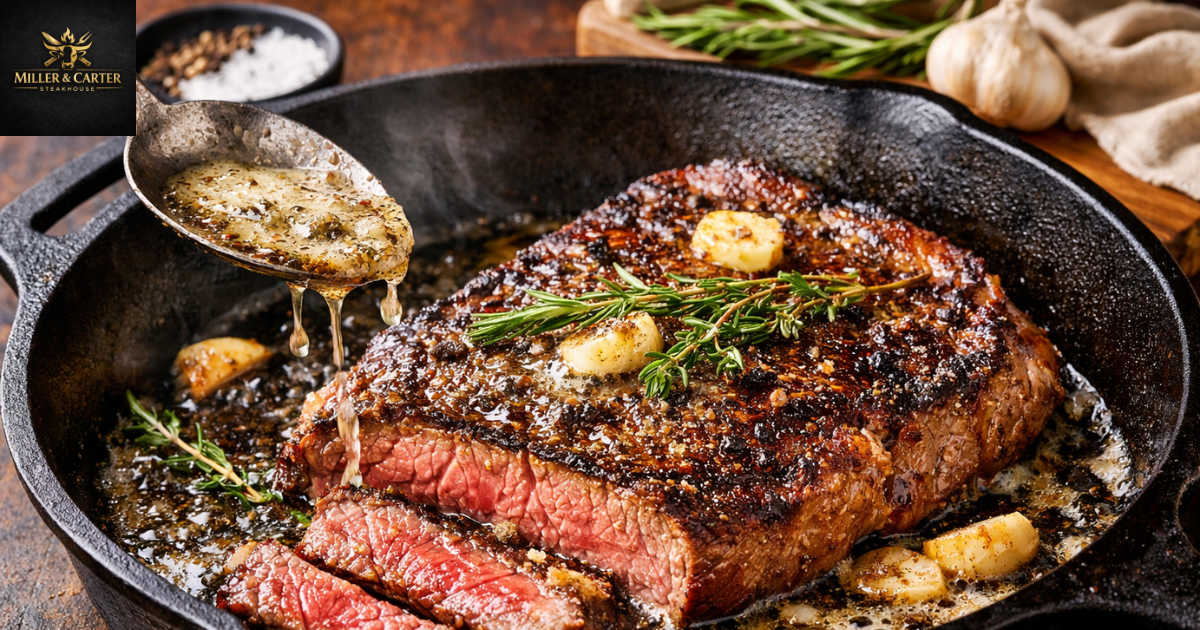
Step 4: Butter Basting
Lower heat slightly.
Add:
- 2 tablespoons butter
- Crushed garlic
- Fresh rosemary or thyme
Tilt the skillet and spoon melted butter over the steak for 1–2 minutes.
This technique builds flavor and enhances the cast iron steak medium rare result.
Cook Time & Temperature
Cooking time depends on thickness, not just minutes.
For precise doneness, always use a thermometer.
If you’re unsure about ideal doneness levels, review our detailed medium rare steak temperature guide.
Steak Temperatures
| Doneness | Internal Temp | Texture |
|---|---|---|
| Rare | 120–125°F | Cool red center |
| Medium Rare | 130–135°F | Warm red center |
| Medium | 140–145°F | Warm pink |
| Medium Well | 150°F | Slight pink |
| Well Done | 160°F+ | No pink |
Remove steak 5°F before target temperature. Rest 5–10 minutes. Resting allows juices to redistribute and improves tenderness.
Steak in Cast Iron Skillet and Oven
For thicker cuts (1.5 inches or more), use the cast iron steak finish in oven method.
When to Finish in Oven
- Bone-in ribeye
- Thick strip steak
- Reverse sear cooking
How to Finish
- Preheat oven to 400°F
- Sear 2–3 minutes per side
- Transfer skillet directly to oven
- Cook 4–8 minutes until target temperature
This method ensures even internal cooking without burning the crust.
If you’re working with different cuts like rump, check our detailed guide on
how to cook rump steak for timing differences.
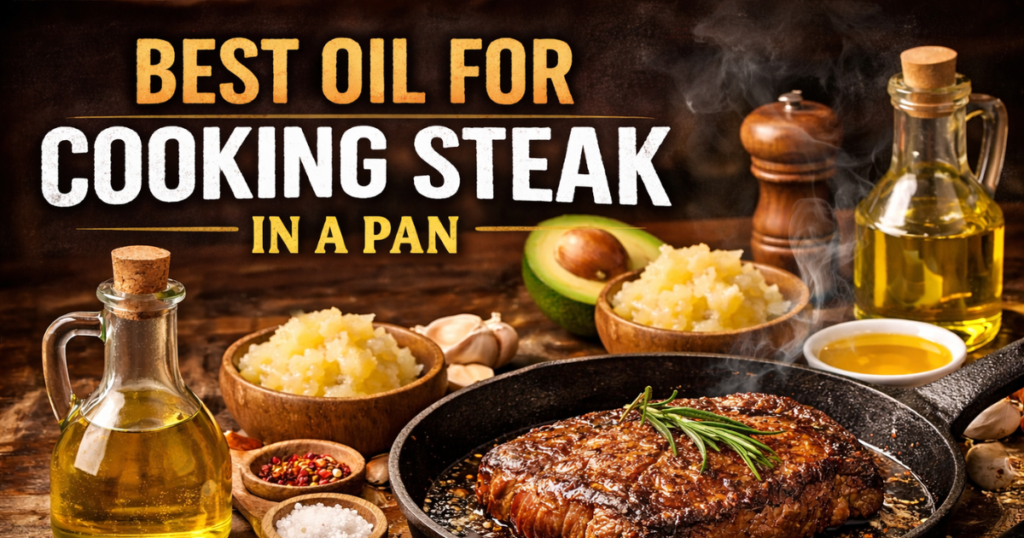
Best Oil to Cook Cast Iron Steak
Choosing the right oil matters more than most people think.
You want a high smoke point oil to prevent burning before the crust forms.
Best options:
- Avocado oil
- Grapeseed oil
- Canola oil
Avoid extra virgin olive oil for high-heat searing.
If you want a deeper breakdown of oils and smoke points, see our full guide on
best oil for cooking steak in a pan.
Use oil to sear. Add butter later for flavor.
Ribeye, Sirloin, and Other Cuts
Different steaks behave differently in cast iron.
Ribeye
High fat, very forgiving. See our breakdown of ribeye steak characteristics.
See our breakdown of
ribeye steak characteristics.
Sirloin vs Rump
Leaner cuts cook faster and require closer monitoring. Compare textures in our sirloin vs rump steak comparison.
Compare textures in our
sirloin vs rump steak comparison.
Understanding the cut improves your cast iron steak cooking success.
How to Choose a Good Steak for Cast Iron Cooking
Selecting the right cut is just as important as cast iron steak cook time or searing technique. Here are tips to choose a steak that fits your keto, paleo, or whole30 goals:
- Grass-fed or finished beef – Leaner and higher in omega-3s, perfect for health-conscious diets.
- Cut selection for meal prep recipe – Sirloin, ribeye, or flat iron work well; choose thicker cuts if you want leftovers for the week.
- Marbling matters – Fat distributes flavor and keeps your steak juicy; balance with your diet preference.
- Avoid pre-marinated or sugary sauces – Keeps the recipe clean for paleo and whole30 compliance.
By following these guidelines, you not only get the perfect easy cast iron steak recipe, but also a dish that aligns with health-focused meal prep plans.
What Is the Maillard Reaction?
The Maillard reaction is the chemical process that creates browning and flavor when proteins meet high heat.
This is why high heat and a dry surface matter.
The deep crust on a steak forms because of the Maillard reaction. A chemical process that occurs when proteins and sugars meet high heat. For a detailed scientific breakdown, see Serious Eats’ Maillard Reaction guide.
Popular Cast Iron Steak Variations & Methods
Many readers search for different variations of this cast iron steak recipe depending on cut, doneness, or cooking style.
If you’re looking for an easy cast iron steak recipe, the stovetop sear + butter baste method above is the simplest and most reliable approach.
For thicker cuts, the steak in cast iron skillet and oven technique also known as a cast iron steak recipe oven finish, ensures even internal cooking without burning the crust.
If your goal is perfect doneness, especially cast iron steak medium rare, always rely on internal temperature rather than strict timing. Many people search for how long to cook steak in cast iron for medium rare, but thickness matters more than minutes.
Flavor variations are simple:
- A cast iron steak recipe garlic butter version increases garlic and herb basting.
- A rosemary-thyme finish creates a classic steakhouse profile.
- A cast iron flat iron steak recipe works well with slightly shorter cook times due to thinner structure.
Some cooks refer to this approach as the best cast iron steak recipe method because it combines high-heat searing, controlled butter basting, and optional oven finishing for consistent results.
FAQs about Cast Iron Steak
How do you cook steak in a cast iron skillet?
Preheat the skillet until very hot, add oil, sear steak 3–4 minutes per side, baste with butter, and cook to target internal temperature, then rest before slicing.
What is the 3-3-3 steak rule?
The 3-3-3 rule means cooking steak 3 minutes per side and resting 3 minutes. It works for thinner steaks but using a thermometer is more accurate.
Do you use butter or oil for cast iron steak?
Use oil for the initial sear because of its high smoke point. Add butter during the last 1–2 minutes for flavor.
How long should I cook my steak on cast iron?
For a 1-inch steak, cook about 3–4 minutes per side for medium rare. Always check internal temperature instead of relying only on time.
What’s the best way to cook steak in a cast iron skillet?
Preheat the pan fully, dry the steak, use high-heat oil, sear without moving it, butter baste, and rest before cutting.
What is the 3-3-2-2 rule?
It suggests cooking 3 minutes first side, 3 minutes second side, then flipping for 2 minutes per side again. Thickness and temperature matter more than strict timing.
What is the 3-3-3 rule for grilling steaks?
It refers to grilling 3 minutes per side and resting 3 minutes. It’s similar to stovetop cooking but works best for thinner steaks.
Do you put butter or oil in a cast iron skillet for steak?
Start with oil. Finish with butter.
Mastering a cast iron steak recipe comes down to heat, timing, and patience.
Use a hot cast iron skillet, choose the right oil, monitor internal temperature, and let the steak rest. Whether you prefer cast iron steak medium rare or medium, this method delivers consistent results.
Once you understand cast iron steak cook time, butter basting, and oven finishing, you can confidently cook restaurant-quality steak at home.
If you want to explore more steak techniques and cut comparisons, visit our complete steak resource center on our homepage. Now heat that skillet, and cook with confidence. if you want to explore best steaks, visit our home page.