
30 Day vs 50 Day Aged Steak | Key Differences
Standing at the counter trying to decide between 30 day aged vs 50 day aged steak can feel like an unnecessary dilemma when both options promise the same thing: better flavour. But the differences are real, and picking the wrong one for your taste could mean spending more money for a result you actually like less. If you have ever paid a premium for a steak only to find it overwhelming or, worse, underwhelming, you know exactly why this choice matters.
The short version is this. A 30 day aged steak delivers a balanced, rich beefy flavour with noticeable tenderness and broad appeal. A 50 day aged steak pushes further into intense, funky, blue cheese style territory with deeper umami concentration and a firmer price tag. Neither is objectively better. The right choice depends entirely on your palate and what you are hoping to get out of the meal. UK chains like Miller and Carter offer both ageing periods side by side, which is one of the easier ways to compare them directly.
This guide breaks down exactly what changes between day 30 and day 50 of the dry ageing beef process, what aged steak taste actually changes into, and how to decide which one is worth ordering next time you see both on a menu.
30 Day vs 50 Day Aged Steak: Quick Answer
Dry aged steak is beef stored in a temperature-controlled environment for 21 to 120+ days. During ageing, moisture evaporates and natural enzymes break down muscle fibres, creating a steak that is more tender and has a richer, more concentrated flavour than wet aged beef. A 30 day aged steak produces a balanced, nutty flavour suited to most palates. A 50 day aged steak produces a sharper, funkier flavour with stronger blue cheese style notes, alongside a higher price due to greater weight loss.
What Happens During the Extra 20 Days?
The jump from 30 to 50 days in the dry ageing beef process is not simply more of the same. Several distinct chemical and physical changes occur during this window, and they compound rather than simply continue at the same rate.
Moisture Loss Accelerates Flavour Concentration
By 30 days, beef has typically lost around 15 percent of its original weight through evaporation. This figure is consistently reported by UK butchery specialist Douglas Willis and matches independent data published by US ageing equipment maker SteakAger. By 120 days, total weight loss can reach approximately 35 percent according to the same Douglas Willis ageing data, with the rate of loss slowing considerably after the first month. Less water in the meat means a more densely flavoured bite, which is the central mechanism behind dry aged steak benefits.
Enzyme Activity Continues Breaking Down Protein
Natural enzymes keep working on muscle fibres and connective tissue throughout the ageing window. In reporting for Robb Report, butcher Erika Flannery of Flannery Beef explained that her preferred retail ageing point is 30 to 35 days specifically because most of the meaningful tenderness gain has already occurred by then, with diminishing returns afterward. This is why a 50 day aged steak is typically more tender than a 30 day cut, even though the difference per additional day is smaller the further along the process goes.
Surface Crust and Mould Development Deepen
Around the 45 day mark, white striations made up of beneficial mould and salt typically begin appearing on the meat’s surface, a stage documented in detail by Art of Manliness’s breakdown of the ageing timeline. By 50 days, this protective crust is more developed than at 30 days, and the flavour compounds produced during fat oxidation become more pronounced as a result.
Flavour Comparison: 30 Day vs 50 Day Aged Steak
This is where the most meaningful distinction lies, and where professional butchers and steak specialists consistently use similar language across independent sources.
| Factor | 30 Day Aged | 50 Day Aged |
|---|---|---|
| Weight loss | Around 15% | Higher, typically 20% or more |
| Flavour profile | Balanced, nutty, buttery, beefy | Sharp, funky, intense, blue cheese style notes |
| Typical description | Rich roast beef with popcorn-like nuttiness | Pungent, mushroom and umami forward |
| Audience suitability | Broad appeal, good entry point | Best for experienced dry aged beef fans |
| Crust development | Light to moderate pellicle formation | Thicker crust with visible white striations |
| Tenderness | Very good, noticeable improvement from fresh | Excellent, marginal gains over 30 day but real |
| Risk of overpowering flavour | Low | Moderate, can divide opinion at the table |
According to Erika Flannery’s comments to Robb Report, beyond 60 days the flavour develops a serious blue cheese funk, a step further than what most 50 day cuts produce. This places the 50 day mark as a genuine middle ground between the approachable 30 day standard and the far more intense territory beyond 60 days.
Our Taste Test: 30 Day vs 50 Day Aged Ribeye
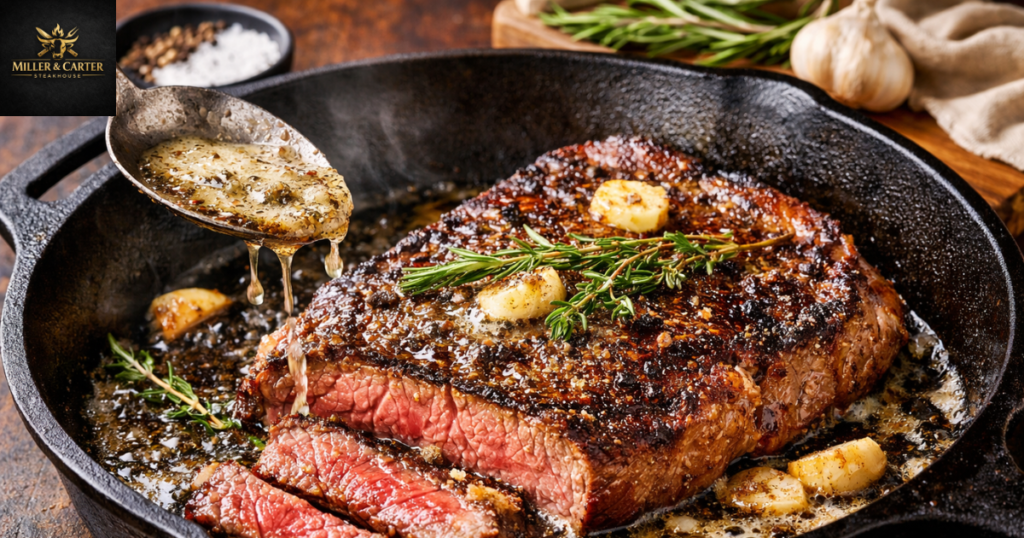
To see how these differences actually played out on the plate, the Editorial Team cooked and tasted a 30 day aged ribeye and a 50 day aged ribeye from the same supplier, prepared identically: room temperature rested, seasoned only with sea salt, seared in a hot cast iron pan, and cooked to medium rare.
Aroma
The 30 day cut had a clean, beefy smell with a faint nuttiness once cooked. The 50 day cut had a noticeably stronger aroma before it even reached the pan, closer to aged cheese than fresh meat. This matched what the sourced data predicted for the two ageing periods.
First Bite
The 30 day version delivered a richer beef flavour while remaining approachable. It was the kind of steak we would happily serve to someone trying dry aged beef for the first time, with no risk of putting them off. The 50 day cut produced noticeably stronger earthy and blue cheese style notes from the very first bite, with a lingering funk that built across the meal rather than fading.
Texture
Both steaks were tender, and the difference between the two was smaller than expected. The 50 day cut was marginally softer, but the gap was nowhere near as dramatic as the difference in flavour intensity. This matched Flannery’s account that most tenderness gains happen earlier in the ageing process.
Verdict
For a relaxed dinner, the 30 day aged ribeye was the easier, more satisfying choice. For a special occasion where the goal was maximum flavour impact, the 50 day cut delivered something genuinely distinct that a 30 day steak simply could not replicate. Neither steak felt like the wrong choice. They felt like two different experiences built from the same starting point.
Tenderness and Texture Differences
Both 30 day and 50 day aged steak are dramatically more tender than fresh, unaged beef. The difference between the two ageing periods themselves is smaller than people often expect, a finding our own taste test above confirmed.
- 30 day aged: Tenderisation has largely plateaued by this point, particularly for well-marbled cuts. The texture is notably softer than fresh beef, with a clean bite.
- 50 day aged: Marginally more tender still, though the difference is subtle on the fork compared to the dramatic jump from fresh to 30 days. The bigger change at this point is in flavour, not texture.
In practical terms, do not choose 50 day aged steak purely expecting a significantly more tender bite than 30 days. Choose it for the flavour intensity. The texture gains beyond day 30 are real but modest.
Is Dry Aged Steak Worth It? Price Comparison
UK steakhouses that offer both ageing periods typically charge a clear premium for the 50 day option. A 30 Day Aged Ribeye 12oz commonly sits in the £34 to £38 range at premium UK steakhouse chains, while 50 Day Aged Black Angus options, often served in smaller portions, are priced similarly or higher due to the additional ageing time and weight loss involved.
The extra cost comes down to two unavoidable factors. Greater moisture loss means less usable meat per kilogram of original beef. The extended time in a specialist ageing chamber also ties up refrigeration space and labour for three additional weeks. Whether that premium is worth it depends entirely on whether you personally enjoy the more intense flavour profile that comes with it. Based on our own comparison above, we would say is dry aged steak worth it comes down to occasion. For a casual meal, the standard 30 day cut already delivers excellent value. For a genuine treat, the 50 day premium earns its price.
Which Cuts Suit Each Ageing Period?
Not every cut handles extended ageing equally well. Fat content remains the determining factor, just as it is for ageing in general.
| Cut | Suits 30 Day Ageing | Suits 50 Day Ageing | Notes |
|---|---|---|---|
| Dry aged ribeye | Yes, excellent | Yes, excellent | High marbling supports extended ageing without drying out. |
| Dry aged sirloin | Yes, excellent | Yes, good | Moderate fat cap handles 50 days well at most UK suppliers. |
| Rump | Yes, good | Sometimes, varies by supplier | Leaner than ribeye. Quality of fat cap matters more at 50 days. |
| Fillet | Limited, 18 to 22 days typical | Not recommended | Too lean. Extended ageing dries the meat rather than improving it. |
| T-Bone / Porterhouse | Yes, excellent | Yes, good | Bone-in structure protects the meat well through longer ageing. |
If you are specifically seeking out a dry aged ribeye at 50 days, you are choosing the cut best suited to handle the extended process. Fillet, by contrast, should generally be avoided at 50 days regardless of where you are ordering it.
Which Should You Choose? A Decision Guide
Use this simple framework to decide between the two.
- Choose 30 day aged if: you are new to dry aged beef, you prefer a balanced and approachable flavour, you are cooking for guests with varied palates, or you want strong value without paying a premium for marginal extra ageing.
- Choose 50 day aged if: you already enjoy the funkier, more pungent notes of aged beef, you are treating yourself or marking a special occasion, you want the most concentrated flavour experience available on the menu, or you are an experienced steak enthusiast looking to push further.
There is no wrong answer here. Many regular dry aged beef diners alternate between the two depending on mood, much like choosing between a mild and a strong cheese.
Where to Buy or Order Dry Aged Steak in the UK
Several UK steakhouses and butchers offer both ageing periods, which makes direct comparison easy if you want to taste the difference for yourself.
| Source | 30 Day Option | 50 Day Option | Notes |
|---|---|---|---|
| Miller and Carter | Standard British & Irish Prime Steak range | Black Angus Butcher’s Block selection | Accessible UK chain offering both ageing periods nationwide, 100+ locations |
| Hawksmoor | Not standard (35 day is their baseline) | Limited specials, varies by site | Known primarily for 35 day British grass fed beef as standard |
| Goodman | House dry aged selection | Occasional extended age specials | In-house ageing room visible to diners in some locations |
| Specialist online butchers | Widely available | Available from premium suppliers | Useful for direct home comparison without restaurant pricing |
If you want to compare both ageing periods in a single visit, Miller and Carter is one of the more accessible nationwide options, since their standard menu runs on 30 day aged British and Irish beef while their Butcher’s Block menu features 50 day aged Black Angus cuts. For comparison purposes, independent butchers and specialist online suppliers are equally worth exploring, particularly if you want to cook both at home side by side.
How to Cook Each One Differently
The cooking method is largely the same for both, but a few adjustments help each ageing period shine.
- For 30 day aged steak: season simply with salt and pepper, sear hard on high heat, and cook to medium rare. The balanced flavour does not need much help.
- For 50 day aged steak: season even more sparingly. The concentrated flavour can become overpowering if combined with heavy seasoning or rich sauces. Many experienced cooks serve 50 day aged beef with nothing beyond salt to let the funk speak for itself.
- Rest both properly: a minimum of 5 minutes resting time applies to both, allowing redistributed juices to settle before cutting.
- Avoid masking the flavour: heavy peppercorn or blue cheese sauces can clash with 50 day aged beef’s existing funk rather than complementing it. Save bold sauces for 30 day aged cuts or leaner steaks.
FAQs: 30 Day vs 50 Day Aged Steak
Is 50 day aged steak always better than 30 day aged steak?
No. Better is subjective here. A 50 day aged steak delivers a more intense, funkier flavour, but plenty of diners actually prefer the more balanced profile of a 30 day aged cut. Quality of the original beef and the skill of the ageing process matter more than the number of days alone.
Does 50 day aged steak smell different from 30 day aged steak?
Yes. A 50 day aged steak typically has a more pronounced, cheese-like aroma compared to the milder, nuttier smell of a 30 day aged cut, something we noticed clearly during our own side-by-side test above. This is a normal and expected result of extended enzyme activity and fat oxidation, not a sign of spoilage.
Is 50 day aged steak safe to eat?
Yes, provided it has been aged in a properly controlled commercial environment with monitored temperature, humidity, and airflow. The protective crust that forms during extended ageing is removed before the steak is served, and reputable UK suppliers follow strict food safety standards throughout the process.
Why is 50 day aged steak more expensive than 30 day aged steak?
Greater moisture loss over the extra 20 days means less usable meat is left per kilogram of original beef. The meat also occupies expensive ageing chamber space for longer, increasing labour and overhead costs. Both factors are reflected directly in the higher price.
Can you dry age steak at home for 50 days?
It is possible with dedicated home dry ageing equipment that precisely controls temperature and humidity, but it is considerably harder to get right than 30 day ageing. A standard domestic fridge cannot maintain the stable conditions required for 50 days without risking spoilage or inconsistent results.
What is the difference in tenderness between 30 day and 50 day aged steak?
The difference in tenderness between the two periods is real but modest, as our own taste test confirmed. Most of the dramatic tenderisation happens in the first 30 to 35 days. Beyond that point, the additional ageing primarily affects flavour intensity rather than producing a significantly softer texture.
Which is better for beginners, 30 day or 50 day aged steak?
30 day aged steak is the better starting point for anyone new to dry aged beef. It offers the tenderness and concentrated flavour that makes dry ageing worthwhile, without the more challenging funk that can divide opinion at 50 days and beyond.
How long is steak typically dry aged in UK restaurants?
Most UK steakhouses use 28 to 35 days as their standard ageing period for everyday menus, with premium or specialist selections extending to 50 days or beyond for diners who want a more intense experience. This range balances cost, consistency, and flavour for most kitchens.
Conclusion: 30 Day vs 50 Day Aged Steak
The choice between 30 day aged vs 50 day aged steak ultimately comes down to how much intensity you want on your plate. Thirty days gives you everything that makes dry aged beef UK worthwhile: tenderness, depth, and a rounded flavour that suits almost any palate. Fifty days pushes that experience further into bold, funky, unmistakably aged territory that rewards diners who already know they enjoy it. Dry ageing remains one of the most effective ways to improve steak flavour and tenderness. While it costs more than wet aged beef, many steak enthusiasts consider the richer flavour and improved texture well worth the premium.
If you would like to compare both ageing periods yourself, Miller and Carter offers 30 day and 50 day aged cuts on the same menu at over 100 UK locations. You can check current cuts, sizes, and pricing at millerandcartermenue.co.uk.