Miller and Carter Beef Dripping Sauce Recipe
By the millerandcartermenue.co.uk team | Last tested: May 2026 | ⏱ Prep: 10 mins | 🔥 Cook: 35 mins | 🍽 Serves: 4
Why trust this recipe? We tested this Miller and Carter beef dripping sauce four separate times over two months, adjusting wine ratios, stock brands, and thickening agents each round. Version one was too thin and sharp. Version two was oversalted from a budget stock cube. Version three got very close. Version four — the one below — is the one we kept making on repeat. We eat at Miller and Carter regularly and compared every test batch directly against the restaurant sauce on the same evening. This is the closest match we have found.
Quick Recipe Card
| Prep time | 10 minutes |
| Cook time | 30 to 35 minutes |
| Total time | 45 minutes |
| Servings | 4 |
| Calories (est.) | ~120 kcal per serving |
| Gluten free | Yes, with correct stock |
| Difficulty | Easy |
There is a moment at Miller and Carter that every steak lover knows. The server arrives, sets down your plate, and pours that dark, glossy sauce alongside your steak. It catches the light. It smells like every good thing beef can possibly be. You take one mouthful and think: I need to learn how to make this at home.
Then you go home, you try it, and it falls completely flat. The colour is wrong. The depth is not there. It tastes vaguely beefy but nothing like what you paid £30 a head for. You try a different recipe. Same result. You wonder whether the restaurant has access to some industrial-grade ingredient that just does not exist in a normal supermarket.
The good news: they do not. The Miller and Carter beef dripping sauce is absolutely makeable at home. It just requires understanding which steps most recipes get wrong. We made it four times to figure that out, and this article documents exactly what we learned.
What Is Miller and Carter Beef Dripping Sauce?
Miller and Carter beef dripping sauce is the signature steak sauce served as part of the restaurant’s famous “steak experience.” When you order a steak, you choose your sauce on the side, and the beef dripping sauce is the most popular choice on the menu.
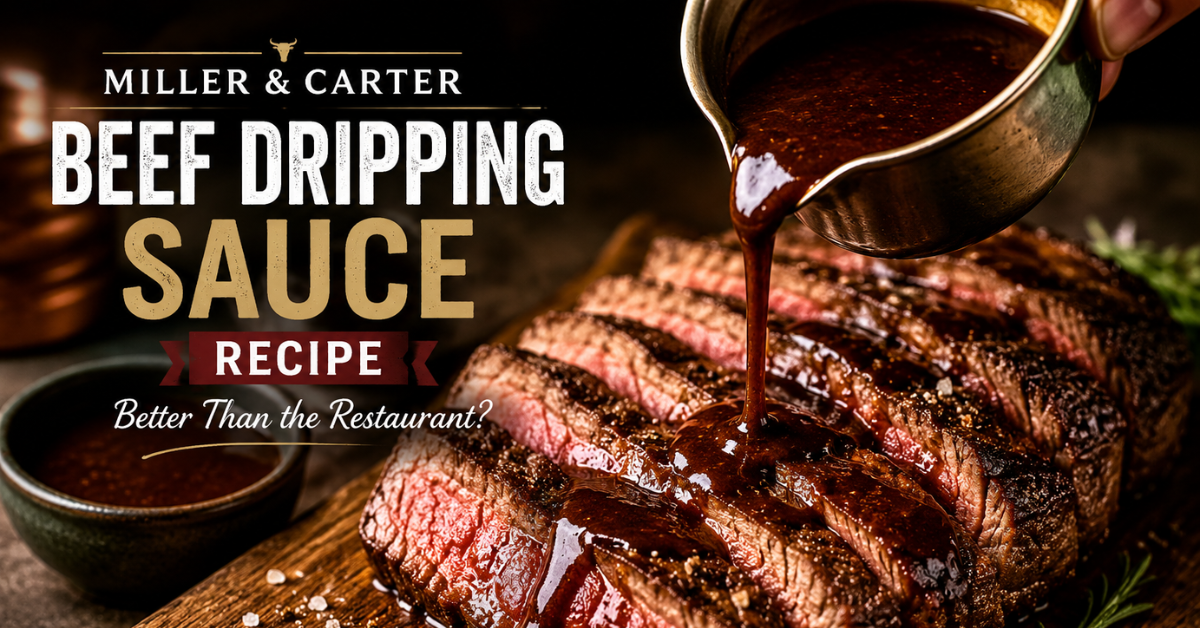
It is a rich red wine reduction built on rendered beef dripping, shallots, garlic, and quality beef stock. The sauce has an intense, almost sticky quality. It coats every slice of steak and keeps tasting beefy and deep long after you have finished eating.
It is not peppercorn sauce. It is not gravy. It sits somewhere between a jus and a bordelaise, with its own unmistakable character.
Miller and Carter is owned by Mitchells and Butlers and is accredited as a “Master of Steak” by the Craft Guild of Chefs. The restaurant ages their British and Irish prime steaks for a minimum of 30 days. The sauce is designed to complement that quality. Making it well at home demands the same respect for ingredients.
The Recipe
Ingredients (Serves 4)
| Ingredient | Amount | Notes |
|---|---|---|
| Beef dripping | 50g total | Split: 20g for frying, 30g to finish |
| Shallots, finely diced | 2 medium | Not white onion — shallots only |
| Garlic cloves, minced | 3 | |
| Star anise | 1 | Discard before wine goes in |
| Fatty steak trimmings | 100g | Ask your butcher, often free |
| Merlot or soft red wine | 80ml | Nothing expensive needed |
| Port | 25ml | Optional but makes a real difference |
| Good quality beef stock | 500ml | Homemade or fresh chilled (see testing notes) |
| Red wine vinegar | 1 tsp | Added after straining |
| Xanthan gum | ¼ tsp | Or cornflour slurry — see FAQ |
| Demerara sugar | pinch | Rounds out wine bitterness |
| Salt and black pepper | to taste |
Step-by-Step Method
Step 1 — Build the flavour base (5 to 6 minutes)
Place a wide, heavy-bottomed saucepan over a medium heat. Melt 20g of beef dripping. Add the shallots, garlic, star anise, and steak trimmings. Cook, stirring occasionally, for 5 to 6 minutes until everything is golden and the fat is fully rendered. Do not rush this step. The Maillard reaction happening here creates the foundation of the sauce’s depth.
Step 2 — Deglaze with wine (3 to 4 minutes)
Remove and discard the star anise. Turn the heat up high. Pour in the red wine and port. Use a wooden spoon to scrape all the caramelised bits from the bottom of the pan. Reduce the wine by two-thirds. You want it nearly syrupy at this point.
Step 3 — Add stock and reduce (20 to 25 minutes)
Pour in the beef stock. Stir well. Reduce to a medium-low simmer and cook for 20 to 25 minutes until the liquid has reduced by roughly half. It should look visibly darker and thicker. This is the longest step. Do not turn up the heat to speed it along.
Step 4 — Strain and season
Pour through a fine sieve into a clean saucepan, pressing the solids firmly. Add the red wine vinegar, a pinch of demerara sugar, salt, and black pepper. Taste carefully. Adjust seasoning.
Step 5 — Thicken and finish
Whisk in ¼ teaspoon of xanthan gum until the sauce reaches a glossy, coat-the-back-of-a-spoon consistency. Take off the heat. Swirl in the remaining 30g of beef dripping for extra richness and gloss.
Step 6 — Serve immediately
Pour alongside your steak right away. It thickens further as it cools, so serve it warm.
Our Testing Notes — What Went Wrong and What Fixed It
This section is what separates a recipe that actually works from one that just sounds good on paper.
Test 1: Used a standard supermarket beef stock cube dissolved in water. The result was thin, overly salty, and had a slightly artificial aftertaste that no amount of reducing could remove. The saltiness intensified as the sauce reduced. Conclusion: stock cube alone is not sufficient.
Test 2: Switched to a fresh chilled beef stock (Waitrose own brand). Immediately better depth. However, we skipped the port and the sauce lacked sweetness. The wine acidity was too dominant after reduction. Result: noticeably sharper than the restaurant version.
Test 3: Added 25ml of port alongside the red wine. This was the turning point. The port rounded out the acidity and introduced a dark, slightly jammy sweetness that brought the sauce very close to the restaurant character. Also added the pinch of demerara after straining, which helped further.
Test 4 (final): Added 30g of beef dripping as a finishing fat, stirred in off the heat after thickening. This gave the sauce the glossy, slightly rich finish that the restaurant version has. The texture and flavour were, in our honest assessment, extremely close to what you get served at the table.
Key lessons:
- Fresh chilled stock outperforms stock cubes significantly in a sauce this simple.
- Port is not optional if you want the restaurant character.
- The finishing beef dripping swirled in off the heat makes a visible and tasteable difference.
- Xanthan gum produces a cleaner, glossier result than cornflour, which can make the sauce slightly cloudy.
Ingredients and What Each One Does
Beef dripping is rendered beef fat. It gives the sauce its signature depth and that beefy, umami-rich backbone you simply cannot replicate with vegetable oil or butter. Find it in the chiller section of Tesco, Sainsbury’s, and Waitrose near the cooking fats.
Shallots are milder and slightly sweeter than regular onions. They break down fully during cooking and add a subtle sweetness that balances the savouriness of the sauce. Do not substitute white onion.
Star anise adds warmth and faint spiced complexity in the background. You would struggle to identify it as star anise in the finished sauce, but its absence is noticeable. Discard it before adding the wine.
Red wine provides acidity, colour, and layered flavour. A Merlot or similarly soft, fruit-forward red works best. Avoid anything heavily tannic.
Port is the ingredient most home recipes miss entirely. Based on our testing, it is what separates a good sauce from a convincing copycat. It adds a dark sweetness and rounds off the wine’s sharpness during reduction.
Beef stock forms the body. The quality of your stock has a direct impact on the final flavour. Homemade is best. A good fresh chilled stock is second. A stock cube is a last resort.
Xanthan gum achieves the restaurant-style gloss and body without cloudiness. Available at Holland and Barrett and most large supermarkets. A little goes a very long way.
Slow Cooker Version
For a slow cooker beef dripping sauce, complete Steps 1 and 2 on the hob exactly as described. Transfer everything to the slow cooker with the beef stock and cook on low for 4 to 6 hours. The result is an even deeper, more concentrated flavour. Strain and thicken on the hob before serving. The sauce can be made the day before and gently reheated — it actually tastes better the next day as the flavours settle and deepen overnight.
Calories and Nutrition
Based on publicly available nutrition data from third-party calorie tracking services, the Miller and Carter restaurant version of the beef dripping sauce contains an estimated 126 calories per serving, with approximately 11g fat, 7g carbohydrates, and 1g protein. The homemade version falls in a comparable range depending on stock and finishing fat used.
| Restaurant (est.) | Homemade (est.) | |
|---|---|---|
| Calories | ~126 kcal | ~110 to 140 kcal |
| Fat | ~11g | ~9 to 13g |
| Carbs | ~7g | ~5 to 8g |
| Protein | ~1g | ~1 to 2g |
These are estimates based on publicly available data and standard ingredient calculations. They are not official figures.
Is Miller and Carter Beef Dripping Sauce Gluten Free?
Yes. The restaurant lists the beef dripping sauce as gluten free on their dedicated Gluten Free Menu, accredited by the Coeliac Society. For your homemade version, the recipe is naturally gluten free provided you use a certified gluten-free beef stock, use xanthan gum or certified gluten-free cornflour to thicken, and check your red wine and port labels if you are highly sensitive.
Where Can You Buy Miller and Carter Beef Dripping Sauce?
Miller and Carter does not sell a branded bottled version of their beef dripping sauce for retail. There is no official product to buy, either in Tesco or on Amazon.
Closest alternative at Tesco: Tesco Finest Beef Dripping Gravy (500g, approximately £3.35) contains beef dripping, Cabernet Sauvignon, and beef extract. It is not the same as the restaurant sauce, but it is a workable substitute on a weeknight.
Amazon options: Searching for beef dripping sauce on Amazon UK returns several options from Tongmaster and smaller artisan brands. None are Miller and Carter products. Read recent reviews before ordering.
Our honest recommendation: Make the recipe above. Nothing currently on the market matches a homemade version made with proper ingredients. The gap is significant.
Pro Tips to Beat the Restaurant Version
Get your steak trimmings from a butcher. Fatty off-cuts are often given away free or sold very cheaply. They contribute enormously to the sauce’s depth during the initial fry.
Use bone marrow if you can. Multiple home cooks and food forums suggest the restaurant version incorporates bone marrow alongside the dripping. Adding one tablespoon of roasted bone marrow to the finished sauce introduces an extra layer of richness that is very convincing. Your butcher can usually provide marrow bones cheaply.
Reduce slowly and patiently. Turning up the heat to speed things along produces a harsher, less rounded sauce. The long, slow reduction is not optional.
Make it the day before. Overnight, the flavours meld and deepen considerably. Reheat gently and you will notice an improvement.
Skim the fat before thickening. After reducing the stock, skim any fat that has risen to the surface. A cleaner liquid produces a glossier, more refined final sauce.
What to Serve It With
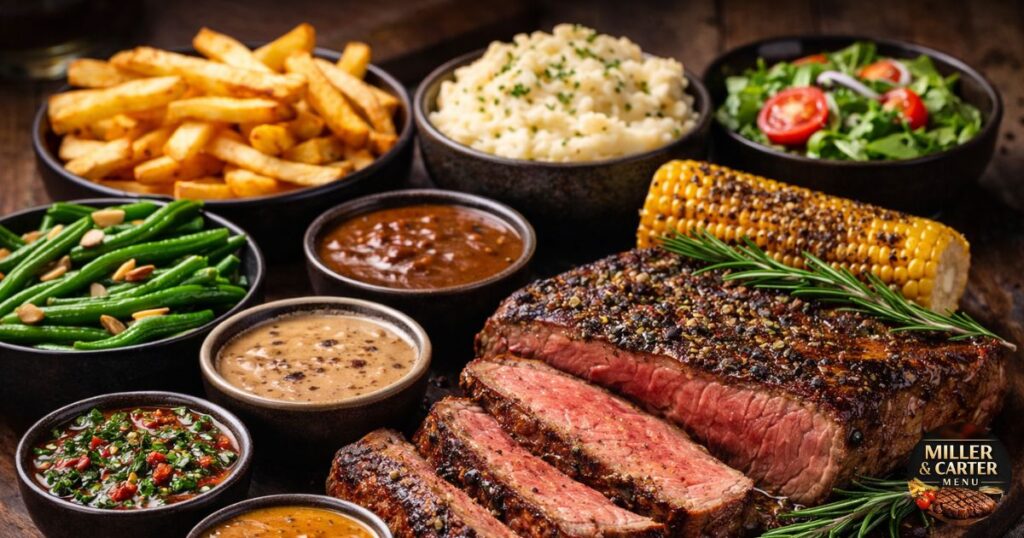
The obvious answer is steak. A ribeye, sirloin, or rump all pair brilliantly. Beyond steak, this sauce transforms slow-roasted topside, beef dripping roast potatoes, and steak sandwiches — thinly sliced beef in a crusty roll with this sauce is one of life’s genuinely great lunches.
If you are recreating the full steakhouse meal at home, the Miller and Carter onion loaf is absolutely worth making alongside this sauce — it is simpler than it looks and completes the experience. For more dish inspiration, see the Miller and Carter dinner menu guide.
FAQ
Q: Can I buy Miller and Carter beef dripping sauce in a bottle?
No. Miller and Carter does not sell a retail version. The closest alternative at supermarkets is Tesco Finest Beef Dripping Gravy. For the real flavour, the homemade recipe above is the best option.
Q: How long does homemade beef dripping sauce keep?
Up to 3 days in an airtight container in the fridge. Freezes well for up to 3 months. Reheat gently on the hob. Do not boil.
Q: Can I make this without alcohol?
Yes. Replace the red wine and port with an equal volume of additional beef stock plus one tablespoon of balsamic vinegar. The depth will be slightly reduced but the result is still a good sauce.
Q: What can I use instead of xanthan gum?
A cornflour slurry works well. Mix 1 teaspoon of cornflour with 2 teaspoons of cold water and whisk into the warm sauce gradually. The sauce will be slightly less glossy but still has good body.
Q: Is the sauce suitable for vegetarians?
No. It contains beef dripping, beef stock, and steak trimmings. It is not suitable for vegetarians or vegans.
Q: Why does my sauce taste too salty?
Almost certainly the stock. Supermarket stock cubes tend to be high in sodium, and a long reduction concentrates that saltiness significantly. Switch to a fresh chilled stock and taste before seasoning.
Q: Can I use this recipe in a slow cooker?
Yes. Complete Steps 1 and 2 on the hob, then transfer to the slow cooker with the stock and cook on low for 4 to 6 hours. Strain and thicken on the hob before serving.
The Miller and Carter beef dripping sauce is absolutely achievable at home. It is not complicated. It just requires the right ingredients, enough patience to let the sauce reduce properly, and a few small decisions — especially port, fresh stock, and a finishing knob of dripping that most recipes never mention.
After four test batches and a direct comparison with the restaurant version, the recipe above is the closest we have found. Use it, trust the process, and taste as you go.
Now go make it. Your steaks have been waiting.