
A flat tire on a flatbed is something almost every driver faces sooner or later, whether during a road trip, a daily commute, travelling for dining, or even while parked. Knowing how to change a tire isn’t just convenient; it’s an important safety skill that can save time, reduce stress, and sometimes save money.
From real driving experience, I’ve had to change a tire on both sedans and SUVs, once on a busy highway shoulder and another time late at night in the rain. Situations like these quickly teach you that preparation matters more than speed. Once you understand the process, how to change a tire becomes much less intimidating.
This guide explains everything step by step, including safety precautions, common mistakes, expert tips, and what to do after installing a spare tire. I will also guide you on how to change a tire step by step with pictures.
When You Actually Need to Change a Tire?
Not every tire issue requires immediate replacement, but some clearly do.
Clear Signs of a Flat Tire
- The car is pulling strongly to one side
- Thumping or flapping sounds while driving
- Heavy or unstable steering
- Tire pressure warning light
- Visible puncture or deflation
If the tire is completely flat or damaged, installing a spare tire is usually the safest option. Driving even a short distance on a flat tire can damage the wheel rim, worsen the puncture, and increase accident risk. Something many drivers unfortunately learn the hard way.
Essential Tools You Should Always Have
Before you ever need to replace a tire, check your vehicle’s emergency kit. You should have:
- Spare tire (doughnut or full-size)
- Jack is suited for your vehicle
- Lug wrench or tire iron
- Wheel wedges or a heavy object
- Flashlight (preferably LED)
- Gloves and a reflective safety triangle
- Owner’s manual
Having proper tire-changing equipment makes automotive troubleshooting much easier during emergencies. Drivers who regularly check their spare tire pressure and tools usually handle roadside situations far more calmly.
Types of Spare Tires
Full-size spare:
It can usually be driven normally temporarily.
Donut spare:
Smaller, lightweight, typically limited to ~50 mph and shorter distances.
If tools are missing or unsafe conditions exist, roadside assistance or a professional tire replacement service is always recommended.
Step-by-Step: How to Change a Tire Safely?
1. Find a Safe Spot First
Pull over to flat ground away from traffic. Avoid slopes whenever possible. Safety tip from experience: Even if the tire is badly flat, driving slowly for a few extra seconds to reach safer ground is usually worth it.
2. Turn on Hazard Lights Immediately
Visibility is critical — especially at night or in bad weather. If available, use reflective triangles or vests. Passing drivers often don’t notice stopped vehicles quickly enough.
3. Apply Parking Brake & Secure Wheels
This prevents vehicle movement during lifting. Skipping this step is a surprisingly common cause of accidents.
4. Loosen Lug Nuts before Lifting
This step is often misunderstood. I’ve seen many drivers jack up the car first, only to struggle because the wheel spins. Loosen nuts slightly while the tire is still touching the ground.
5. Position Jack Correctly
Use manufacturer-recommended jack points to avoid underbody damage. Owner manuals show exact placement.
6. Lift Vehicle Carefully
Raise until the flat tire clears the ground by several inches. Ensure stability before continuing.
7. Remove Flat Tire
Fully loosen the lug nuts, then pull the tire straight outward. Place a tire flat nearby. It prevents the tire from rolling.
8. install Spare Tire
Align wheel holes with lug bolts and push firmly into place.
9. Hand-Tighten Lug Nuts First
Use a star pattern to ensure even pressure.
10. Lower Vehicle Slowly
Bring car back down gently before final tightening.
11. Final Tightening & Safety Check
Fully tighten nuts, store tools securely, and check spare tire pressure if possible. You’re now safely back on the road.
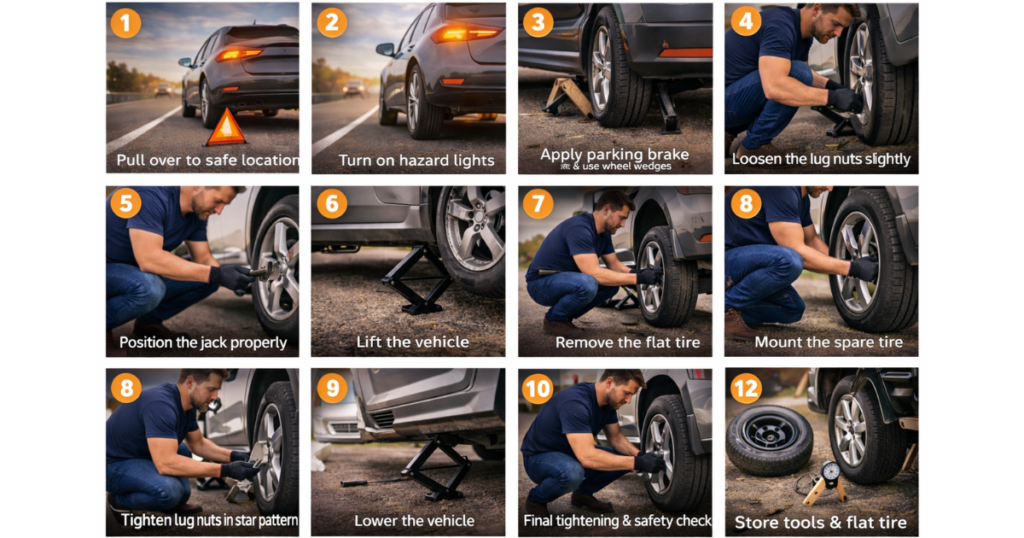
How to Change a Tire Step by Step with Pictures?
To make changing a car tire easier, the image below will help you a lot.
Real-World Timing Expectations
First attempt: ~30 minutes
With experience: ~15 minutes
Weather, lighting, traffic, and vehicle size all affect timing.
What to Do After Installing a Spare Tire?
Driving Guidelines
A spare tire is temporary, not a permanent fix. Follow the below steps for safe journey.
- Keep speed under ~50 mph
- Avoid long distances
Replace the Real Tire
Although, it is safer, but still replace the original tire soon. If you’re unsure, visiting a service station or professional tire replacement provider is the safest choice.
Mistakes Drivers Commonly Make
These come from real roadside observations:
- Lifting the car before loosening lug nuts
- Parking on uneven or unsafe surfaces
- Ignoring hazard visibility
- Driving too fast on spare tires
- Forgetting to retighten lug nuts later
Avoiding these mistakes makes the process safer and easier.
Weather & Emergency Situations
Changing a tire in rain, extreme heat, or darkness increases the risk.
If possible:
- Move to a well-lit or sheltered area
- Use gloves for grip
- Stay highly visible to traffic
A flat tire is one of the most common roadside emergencies drivers face, so basic preparation is essential.
When Not to Change a Tire
Busy highway shoulder situations test your nerves fast. Cars rush past you like a storm. Even if you know how to change a tire, that spot is a bad classroom. I once tried helping a friend there. The wind from the trucks shook our vehicle, making it unstable on the jack. In moments like that, safety beats pride every time.
On uneven ground, your jack can tilt without warning. Add heavy rain, and suddenly your grip slips. With poor visibility, other drivers may not see you. That mix turns a simple job into something truly unsafe. If you also lack proper tools, frustration grows quickly. A weak wrench or a missing jack wastes time.
When you notice the car shifting or feel unsure, pause. Trust your instincts instead of forcing it. Calling roadside assistance can feel annoying at first. Yet a professional tire service handles these risks daily. In truth, stepping back is often the smarter choice.
How to Prevent Future Tire Problems
Regular checks dramatically reduce emergencies.
Simple Maintenance Habits
- Monthly tire pressure checks
- Routine tread inspection
- Tire rotation every 5k–7k miles
- Avoid potholes and road debris
- Maintain an emergency kit, including a Flashlight, Gloves, a Reflective vest, a first-aid kit, a Portable air compressor, and a Tire pressure gauge.
Drivers who consistently follow these habits rarely face sudden roadside stress.
Frequently Asked Questions
Final Verdict
Learning how to change a tire is a simple but valuable driving skill. It builds confidence, reduces dependence on roadside services, and improves overall safety awareness.
Based on real experience, preparation—not strength or speed—makes the biggest difference. Checking your spare tire, tools, and safety gear regularly ensures you’re ready for unexpected situations.
And remember, while changing a tire yourself is useful, a professional inspection afterwards ensures long-term safety.